Winter Bass Fishing: Focus on the Extremes

Winter may be tough fishing but its prime time to catch giant bass! Don't let the cold temperatures and tough fishing fool you, this is one of your best shots at the fish of a lifetime and you should absolutely be on the water. 

This isn't the time to be exploring new baits or trying to build confidence. During the cold water months you should be focused on a handful of confidence baits so you know that you're doing the right things, even when you aren't getting bit. If you stick to your game plan the time will come that you cross paths with a truly giant bass!

Baits that we recommend during the cold Winter months...

Big Baits:

-7" Basstrix

-8" Trash Fish

-Owner Beast Hook

Winter Fishing: Top 5 Baits for Cold Water Bass

With winter fast approaching most lakes have turned over and the bass have headed for warmer deep water haunts. "Deep" is a relative term that varies lake to lake but when bass head for the depths a lot of anglers lose confidence.

In this week's video we break down our favorite baits for seeking out those deep water bass. This list may be missing some baits you expect but when the going gets tough, these 5 options are consistent producers.

1) A Football Jig: Tim and I vary a little on our specific choices. I lean toward a 1/2 oz or heavier Dirty Jigs Finesse Football (Give "Go To" or "Super Matt Brown" those colors are deadly). Tim takes it a step further and will occasionally go as light as 3/8 oz with his Dirty Jigs HP Football Jig. Why go with a light weight in deep water, you ask? With the lighter weight comes a smaller hook, allowing you to drop to lighter line and even throw the jig on a spinning rod if conditions require.

2) A Drop Shot: Tried and true, this bait is deadly in deep water! Tim likes to downsize, often using a size 2 Owner Mosquito hook with a small tungsten weight. He insists that the light hook allows his bait to have maximum action in deep water. As for baits, he uses a wide range of options but a 6" Roboworm Margarita Mutilator is a proven winter time color.

3) Ball Head: The ball head is such a simplistic way to fish and consistently catches quality fish in the cold water months. Much like a darthead, you should thread the worm on so the point of the hook is left exposed. The difference between a ball head and virtually every other head design is that it has almost no action of its own. This is a drawback most of the year but when the water is cold that "dead action" drives the fish crazy. Tim and I both agree, a 5" senko is your best option with this presentation. Day in and day out, it gets a significantly larger bite than smaller worms.

4) A Jigging Spoon: The spoon is a deadly bait throughout the fall but don't lose faith as cooler temps take over and the bass become lethargic. Using a very subtle flip-flop approach, keeping the jig on bottom at all times, is a phenomenal way to get a big bite in winter. Matt prefers the Blade Runner DUH spoon for its ideal weight, size, and color schemes.

5) The Small Swimbait: I prefer the 6" Basstrix or the 4.8 Keitech coupled with 1/2 oz Matt Allen Signature Swimbait Head. With an exposed lead head its very easy to maintain bottom contact. From rock to gravel, sand to mud, you'll feel every change in contour and the bite will be unmistakable. For this method I maintain constant bottom contact and swim the bait as slowly as I can stand. It presents a sizable but slow moving meal to the bass that is hard to resist.

This Winter, consider not getting your boat winterized. Instead, head for the lake! The bass are still there and they still need to feed. You may be surprised to find that some of your biggest bites of the year come when the water temperature is below 50 degrees.

How to Back Reel

When the fishing gets tough many anglers turn to finesse tactics. While this increases their odds, it creates its own set of unique challenges. The most significant of which is learning to adapt to fighting big fish on light line.

The technology behind spinning reels has vastly improved in recent years but there is still room to fine tune your skills. One of the best ways to increase your odds at landing big fish on light tackle, is to back reel.

In this week's video, Tim finds himself fighting a 14 pound catfish. He was completely outgunned, armed with only a Stratic, Dobyns Spinning Rod, and 4 lb Line. Catfish are known for pulling hard, rolling in the line, and otherwise destroying tackle. Instead of letting the drag scream and hoping for the best, we flipped the camera on so Tim could walk you through how to back reel, why he's doing it, and how it can benefit you.

The biggest misunderstanding about back reeling is that your drag will be disabled. This simply isn't true, its still intact and working normally. When you're reeling in reverse there is no stress on the line but if a fish pulls harder than you can react to, the drag is still in place and will release line like usual. Really, you have nothing to lose and everything to gain so the next time you find yourself tied to a big fish, flip that little switch on your reel and give it a try!

Finesse Tubes: Two Very Different Styles

From coast to coast, bed fishing to ledge fishing, the tube jig has a place on every boat. There is no surprise that tubes have found a place in both Tim and Matt's arsenals. The surprise is that after years of fine tuning their approaches, they agree on virtually nothing except the tube's effectiveness on both numbers and size of bass.

Both anglers break down the details of their baits, equipment, and even touch a bit on tactics throughout the video for finesse fishing with tubes.

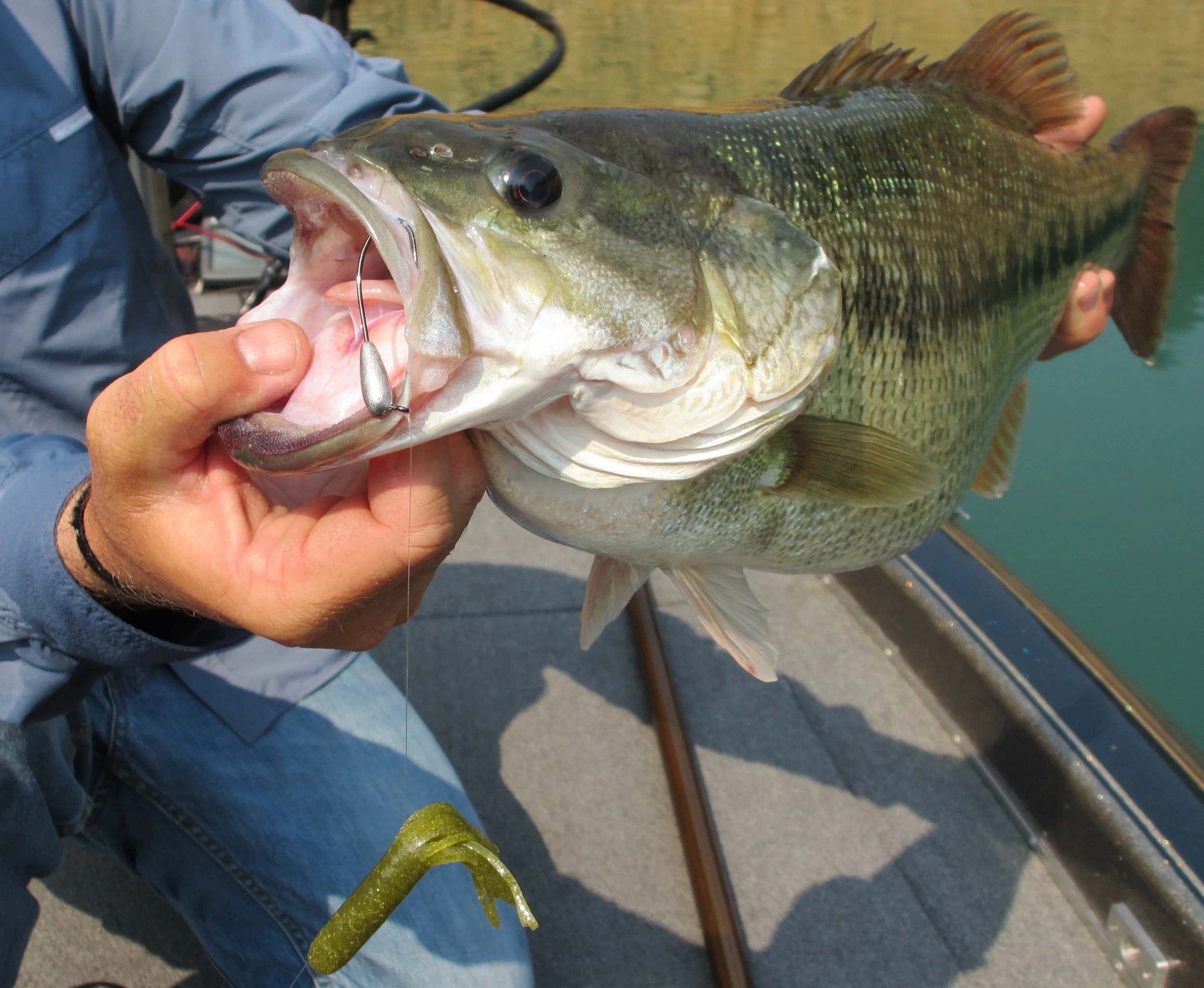
This "Old Ugly" tube slid up the line exposing the jig hook in this bass' mouth

This "Old Ugly" tube slid up the line exposing the jig hook in this bass' mouth

Where Tim prefers a 7'9" 2 power (medium light) rod, Matt prefers a 7'8" 3 power (medium) rod. **For those angler's looking for a shorter rod try the 742 or 743 Spinning Rods**

Both angler's prefer similar tubes but do not agree entirely on brand or color. Tim prefers the 3 1/2" Dry Creek Tube while Matt prefers the 3 1/2" tube from Get Bit Baits. The size is identical but the colors are different, as are the textures.

Lead heads are another point of disagreement. Tim adamantly believes in the 90 degree line tie of the Owner Darter Head. Matt prefers the 60 degree of the Bite Me Flat Eye Tube Jig with a 3/0 hook.

From Top to Bottom: Mud Pie, Green Pumpkin Purple/Gold, Old Ugly

The one aspect of their equipment that both anglers agree on is the weight of their line. Both use a 10-15 lb braided line (Sufix 832 or Power Pro) and connect it with a blood knot to 6-8 lb fluorocarbon. (Sunline for Tim and P-Line for Matt)

At the end of the day what you should take away from this article is that there isn't a right answer.

Both anglers have proven their style effective on all 3 major species of bass. Each has refined their approach to meet their style and needs on the water. Decide which style best fits your fishing and apply these tips to begin refining your tube fishing.