
Top 5 Topwater Walking Baits

In 1939 the first plastic "Zara Spook" hit the market. After more than 80 years it has undergone quite a few changes but it is still the most prevalent walking bait on the market. Until recently, there were not a lot of competitors in this category but seemingly overnight the flood gates have opened.  With significant sections of wall space in every tackle shop covered in walking-style topwaters its difficult to know where to start.

Even we had a difficult time narrowing it down to just 5 baits. Frankly, we fudged a little in the end anyway but who can blame us? You may be surprised by the list we came up with. There were some baits omitted that definitely would have made the cut if their availability were different but you can't make the list if no one can get the baits!

In no particular order our list of top 5 baits are as follows:

Top 5 Walking Baits

The Super Spook: Can you blame us? Its the bench mark! They are in virtually every tackle box (including ours) and have earned their place. I lost count of how many big bass I've caught on the spook!

The Rover: The Rover is a fairly new addition to the list but it has earned its place. On multiple occasions I have been able to "fine tune" my pattern and catch bigger fish by switching to a rover. Here's a tip... get the "tuned" version by Scott Martin, you won't be sorry.

The Vixen: While sporting the same body style as a rover, the high-pitch sound emitted is completely different. The recent prices on EBAY, if nothing else, show the power this bait holds over bass (and fishermen). Now that they are widely available again this bait should be added to your arsenal.

The Gunfish: With its unique cupped face and slender body the gunfish has a unique spitting action that turns followers into biters. I sometimes wish they had more than two hooks on the smaller models but the fish eat it, it cannot be denied.

The popper: (I told you we fudged a little but to narrow it down were talking about the Yellow Magic, Rico, and Splash It) How does a popper make a list of talking walking baits? Easy! Try it and you'll find out! They walk, they move water, and they get eaten just like they're larger relatives. If your fish are finicky, especially in shallow water, walk a popper. Its an action they rarely see and they will ERUPT on it!
Soft Body Frogs: Everything You Need to Know

"Soft-body Frogs" is such a huge category but is often overshadowed by Hollow-Bodied Frogs. Let's start with why you need them and then I'll give a more detailed definition of what they are.

When you think of soft-body frogs think "soft buzzbait". These are the 4x4, go anywhere, do everything, come back unscathed, topwater bait. You can throw them through tullies, over slop, on timber, in grass, and they will paddle their way back to the boat. When the cover gets nasty, when you get tired of picking grass off hooks, out of blades, or dealing with snags, its time for the soft-body frog.

So what are they? First off, its a plastic bait that is solid-bodied. Second, it has one or more "kicking" feet that help the bait rise to the surface and create action as it is steadily retrieved on the surface. Third, it has no additional appendages or it becomes a "creature bait". Lastly, it has no hook. It will need to be texas-rigged with some sort of  after-market hook.

Most soft plastic brands now produce a soft-bodied frog. So what makes one better than another? It comes down to two variables: Sound and Speed.

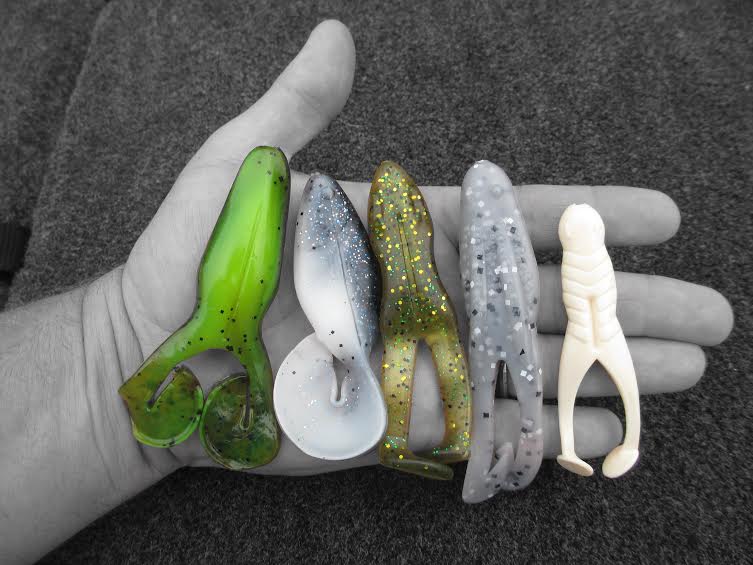
From Left to Right: Strike King Rage Tail Toad, Rage Tail Shad, Stanley Ribbit, Zoom Horny Toad, Sizmic Toad

From Left to Right: Strike King Rage Tail Toad, Rage Tail Shad, Stanley Ribbit, Zoom Horny Toad, Sizmic Toad

Each frog has a unique sound and action. Its important to explore different "sounding" baits to find what your fish want. As a rule of thumb the baits with thicker feet (Rage Tail for example) will create a louder, more violent sound while those with thin feet (Horny Toad for example) tend to be much more subtle.

Additionally, the thicker the feet on a bait the more quickly they must be retrieved to create the desired sound. If the bait it making a subtle sound it can generally be retrieved much more slowly than a loud bait and still make the proper sound. This is so often overlooked and is CRITICAL to why some baits get bit more than others. We're so keyed on sound and action we don't even notice that one bait has to go nearly twice as fast as the next. No wonder the bass aren't eating all the baits, all the time!

You'll need to explore a few models to find what works best on your waters but a great place to start is the Rage Tail Toad, Zoom Horny Toad, and Stanley Ribbit. These 3 baits will cover the gamut of sound and speed so you can get a feel for what your bass prefer and you won't break the bank trying to dial in the pattern.


Frog Modifications to Land More Bass

The water is warm, the grass is growing, and the bass are shallow, the time has come. If you aren't throwing a frog by now you're missing opportunities for some heart-pounding explosions that you'll never forget! The frog is a key presentation during the summer months that every angler should at least have a familiarity with. Whether you're popping a frog in the shade of docks, walking it along a rocky shoreline, or dragging it on a cheese mat, its a fun way to lure BIG bass out of the depths.

The frog has a reputation for giant bass. Unfortunately it also has a reputation for missed fish and broken hearts. This video is going to cover some of the simple changes you can make to your frogs that will eliminate the heartache and put those big fish in the boat.

This shows the length comparison between the stock leg and a leg that has been cut down to eliminate short strikes and missed bites

The key to consistent success comes down to two simple changes. In my opinion, every frog should have the legs trimmed and the hook position altered before the bait is ever thrown in the water. There are dozens of other changes that you hear about from time to time but these two are easy and have a huge impact on your success.

When trimming the legs I cut the rubber with scissors until there is approximately 1.5 to 2 inches of material left. This increases the odds that the bass will target the main body of the bait rather than clamping down on just the legs. An added benefit of the trimmed legs is that its also easier to walk a frog once the legs have been cut shorter.

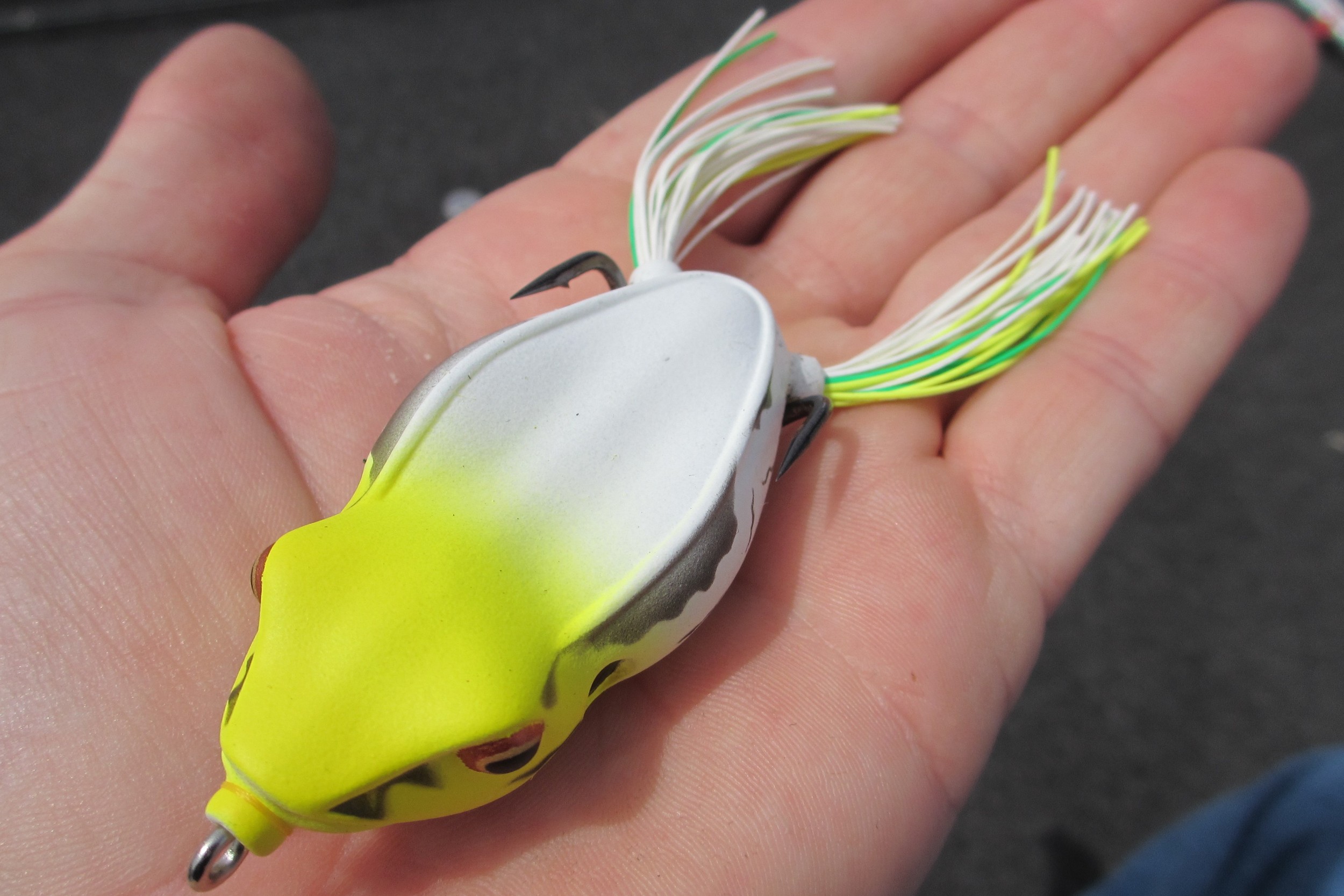
Here you can see a properly modified frog. Both the short legs and increased hook gap are visible

Here you can see a properly modified frog. Both the short legs and increased hook gap are visible

When modifying the hooks I bend them both out and up, away from the body. By doing this I am able to create a larger hook gap. When bass eat the bait with a modified hook they no longer need to fully crush the body of the frog to expose the hook. Doing this makes it much easier to hook the bass, even when an angler has a softer hookset. 

Depending on brand, bending the hooks can take a great deal of force. I generally have to bend the hooks farther than I want, as the steel will spring back part way as soon as the pressure is removed.  Use a stout pair of pliers and exercise caution.  its very easy to slip and end up on the wrong end of a strong hook. If you take your time, you shouldn't have any issues.

We hope you'll take these tips and apply them to your fishing. Once you do, come back and share your experiences. We'd love to hear about the bass you're putting in the boat!